
Too Bright to Be Useful: What Headlights Can Teach Us About Work Lighting
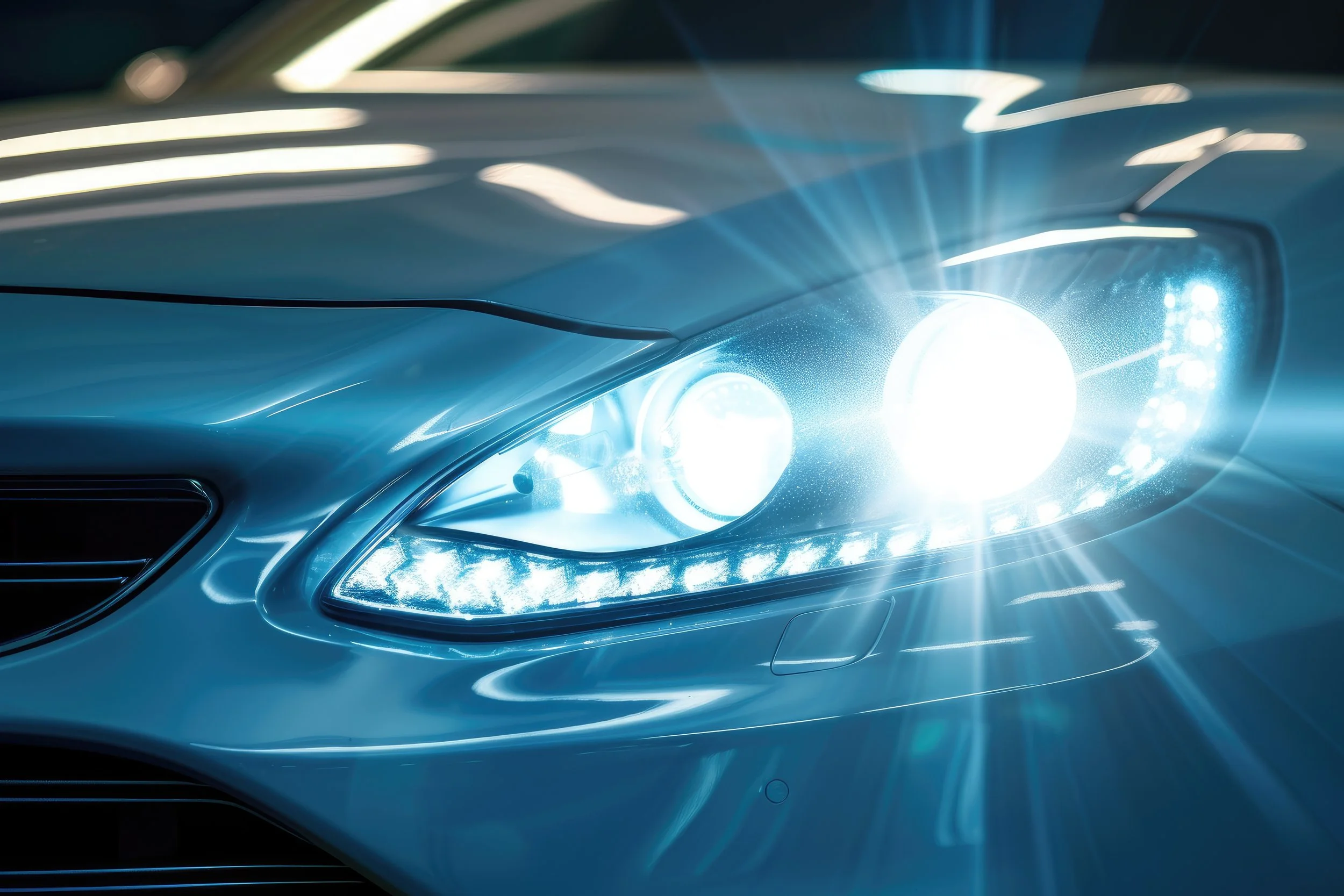
Across the fleet and OEM world, lighting specs have escalated quickly. LED technology has made it easy to add more lumens, more fixtures, and more output — often at minimal cost or power draw. On paper, it looks like a win.
But just as modern vehicle headlights are being reviewed for being too bright, the same issue is quietly playing out in work lights, trailer interiors, and exterior task lighting. For fleets and OEM builders, this raises an important question:
Are we delivering usable light — or just impressive numbers?
Headlights: A Cautionary Tale for Lighting Design
Today’s LED headlights are powerful, efficient, and long-lasting. They also generate frequent complaints about glare, particularly from drivers of lower vehicles or those approaching at night.
The problem isn’t that headlights are bright — it’s that brightness without optical control creates unintended consequences. Poor beam shaping, incorrect mounting height, and insufficient cutoff all turn good illumination into a liability.
For OEMs, this has triggered tighter scrutiny of headlamp standards and a growing emphasis on:
Beam pattern and cutoff control
Mounting position and aim
Adaptive and glare-reducing technologies
This evolution in headlight design offers a useful parallel for fleet work lighting.
The Same Challenges in Fleet Work Lights and Trailers
High-lumen LED work lights are now standard across many fleet builds:
Service bodies and utility trucks
Enclosed and refrigerated trailers
Mobile workshops and response vehicles
Exterior loading and rear-door work zones
While these lights often meet or exceed lumen targets, field feedback tells a more nuanced story. Common complaints include:
Glare when accessing tools or stepping into a trailer
Harsh reflections off aluminum walls, shelving, and equipment
Bright hotspots paired with poorly lit corners
Eye fatigue during extended tasks
From a fleet perspective, this matters. Poor lighting doesn’t just reduce comfort — it can slow task completion, increase error rates, and contribute to safety incidents.
Why More Lumens Don’t Always Improve Productivity
Modern LEDs have become extremely intense light sources. Many produce 50–100 lumens per square millimetre of light-emitting surface, with some reaching as high as 250 lm/mm². COB LEDs, which cluster multiple dies under a single phosphor layer, may look larger, but the surface intensity remains high — and sometimes even higher.
This level of intensity is a key contributor to glare.
When lighting is overly intense or poorly diffused:
Pupils constrict, reducing visibility in darker areas
Reflections wash out labels, wiring, textures, and edges
Visual fatigue increases, especially during night operations
In enclosed spaces like trailers, white walls, metal panels, and glossy equipment reflect this high-intensity light directly back into the user’s eyes. The result is lighting that technically meets specifications — but fails in real-world use.
A Different Approach: High Output Without the Glare
This is where lighting design has to change direction — much like headlight design already has.
Photonix™ by illumos was developed to deliver professional-grade illumination with greatly reduced glare and no hot spots, by addressing the root causes rather than simply adding more output.
1. Lower Surface Intensity, Not Lower Performance
Instead of producing high lumens from a tiny, intensely bright source, Photonix™ spreads light across a much larger emitting surface. While total lumen output remains high, the surface intensity is reduced to less than 1 lumen per square millimetre.
The result is powerful illumination that’s comfortable to work under — even at close range — with dramatically reduced glare.
2. Daylight-Optimised Colour Temperature
Photonix™ operates at 6000 Kelvin, closely matching natural daylight between full sun and overcast conditions. This range has proven to be optimal for task lighting and working environments, supporting clarity without introducing harshness.
3. True Colour Rendering (CRI >90)
Achieving a CRI above 90 at 6000K is highly unusual — and intentional.
Most 6000K LEDs sit around 70–80 CRI, which causes colours to appear unnatural and forces the brain to constantly reinterpret what it’s seeing. That constant correction creates cognitive load, leading to fatigue. It also makes it harder to distinguish:
Colours vs. shadows
Surface textures vs. stains
Moisture, leaks, or defects
Higher CRI reduces eye strain, improves accuracy, and supports longer working periods without fatigue.
Reaching this level of colour accuracy does reduce raw light output, which is why Photonix™ uses more LEDs to achieve the same lumen levels. This increases cost — but it’s a deliberate engineering decision that prioritises usability, safety, and long-term performance over headline numbers.
Why This Matters for Fleets and OEM Builders
Lighting decisions affect far more than initial build cost:
Technician efficiency and task accuracy
Safety and injury risk
Eye strain and fatigue over long shifts
End-user satisfaction with the upfit
A system that looks impressive at handover can quickly become a daily frustration in the field. Lighting that’s designed around glare reduction, colour accuracy, and real-world conditions tends to disappear into the background — which is exactly what good lighting should do.
Final Takeaway
Headlights show us what happens when brightness outpaces control. Fleet work lighting faces the same risk — and the same opportunity.
By focusing on surface intensity, optical control, colour quality, and human vision, fleets and OEM builders can deliver lighting that doesn’t just meet specs, but actually supports the work being done.
Because in real fleet environments, the best lighting isn’t the brightest.
It’s the lighting people don’t have to fight against — shift after shift.